
Laser Acceleration
Click on the movie below...Machine acceleration and deceleration capabilities play a primary role in how long it takes your fiber laser machine to cut a part. Watch the movie to learn more.

Acceleration on Intricate Sheet Metal Parts
Machine acceleration helps reduce part cycle time on both thick and thin parts. On thick plate material, the acceleration helps you move quickly between cuts (rapid traverse moves). On thin sheet metal, acceleration helps you during rapid traverse moves and accelerating and decelerating on intricate geometry.
This part shows a lot of ornate detail that will require the machine to decelerate and accelerate on all direction changes.
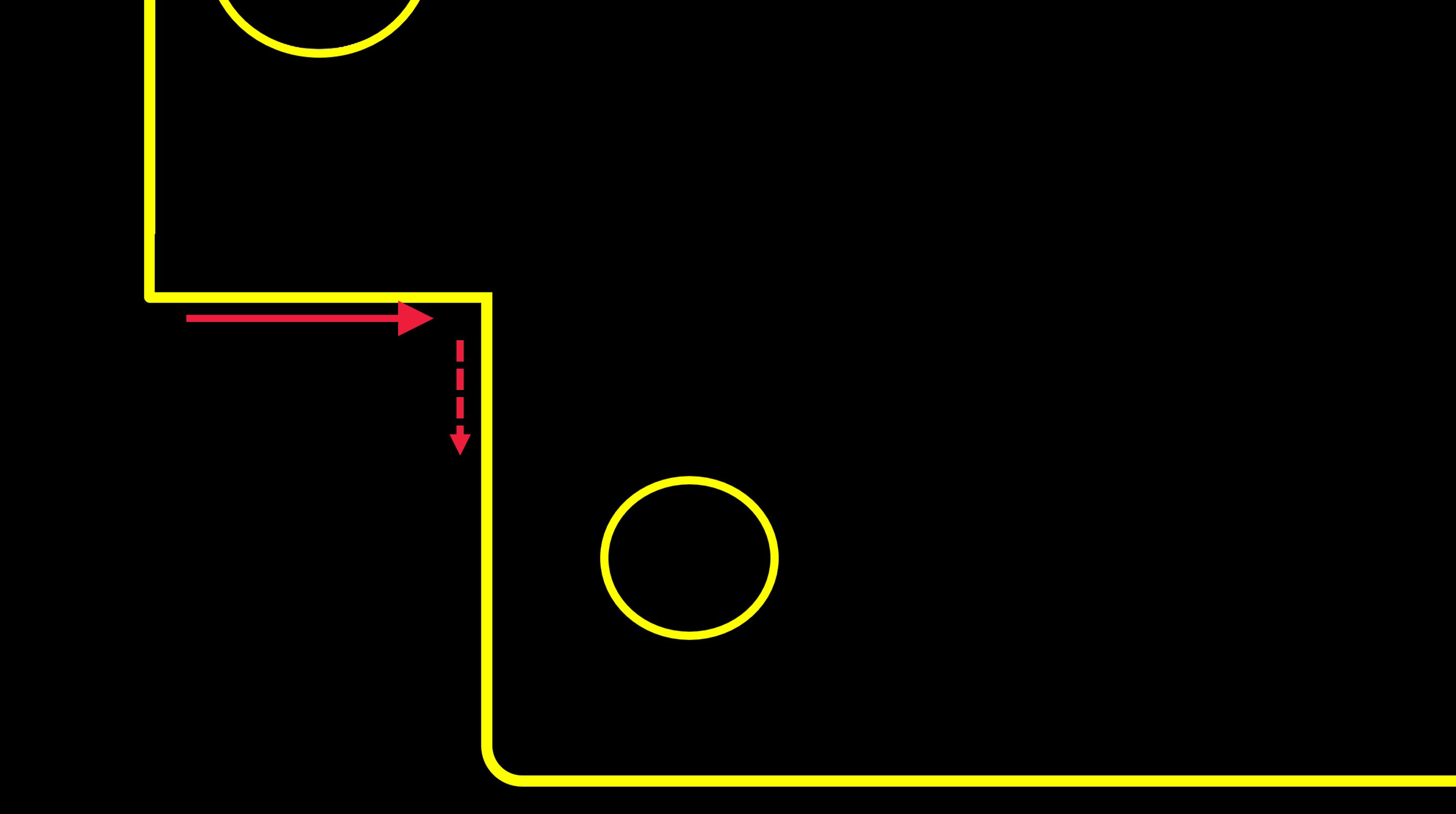
Negotiate Corners Faster with 6g Acceleration
If the fiber laser is cutting left to right as shown by the solid red arrow, the machine will have to accelerate at the beginning of the segment and then decelerate as it approaches the corner. If the machine is not quick enough, then it’s likely the laser will never reach the programmed cut speed on this short segment before it has to start decelerating at as it prepares for the right hand turn (in direction of the dotted line).
DESIGNED FOR ACCELERATION
- Linear motors are used on all 3 axes (yes, even the Z)
- Polymer granite base, such as used on CMMs, provides ultimate rigidity, temperature stability, and vibration dampening
- Gantry configuration is idealized for low weight and high stiffness
- On the Eagle iNspire the bridge is carbon fiber – 2.5 times lighter than steel yet delivering greater stiffness and vibration dampening
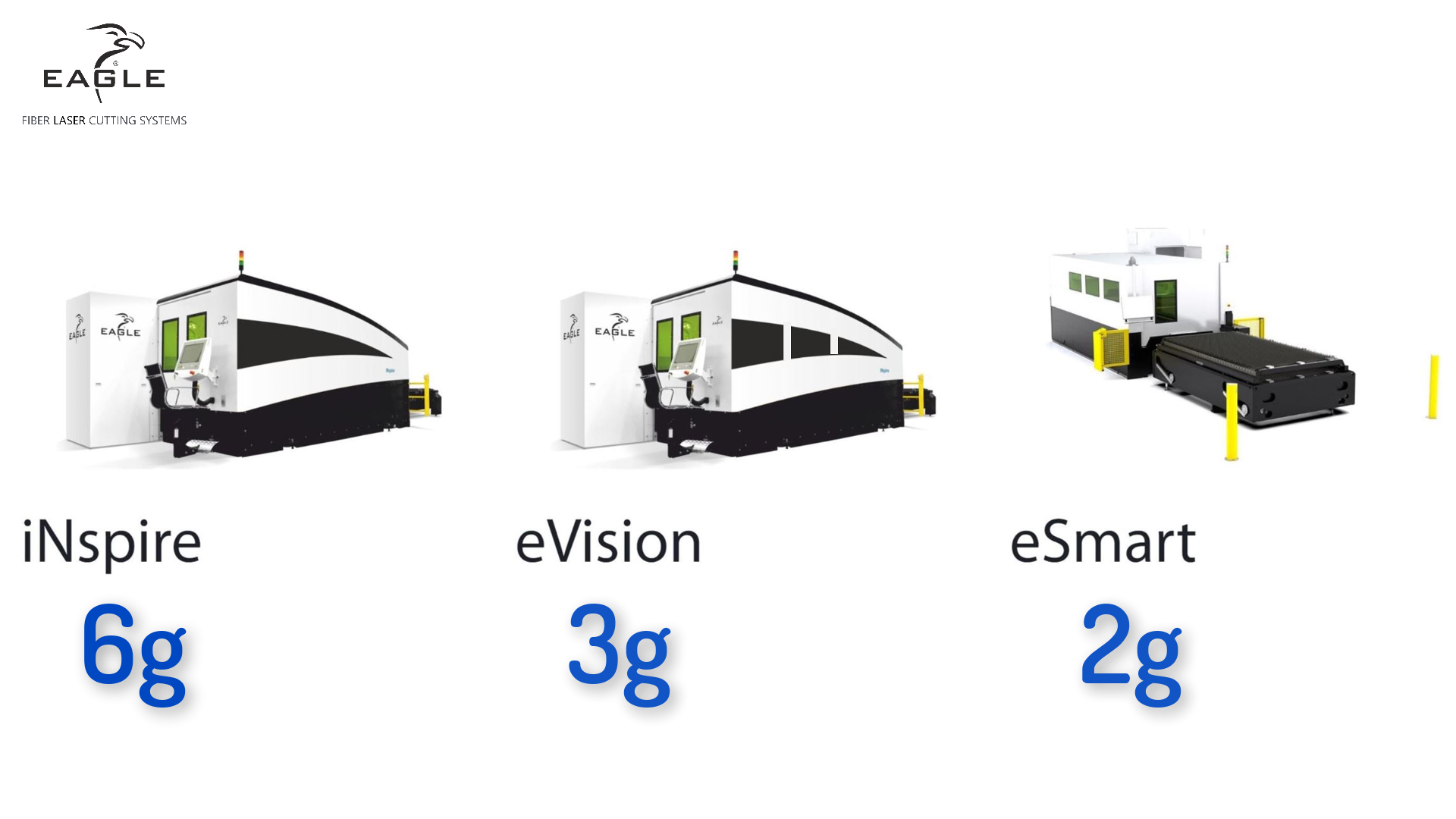
- Eagle iNspire = 6g acceleration, eVision = 3g acceleration, and eSmart = 2g acceleration